
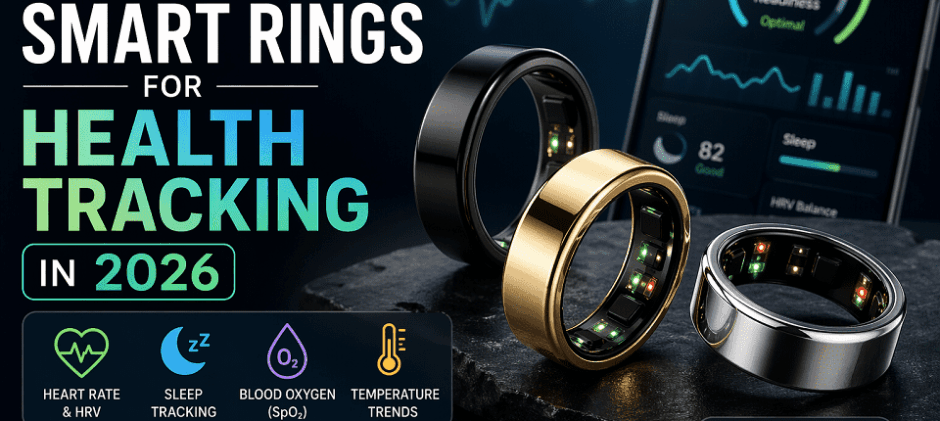
Best Smart Rings for Health Tracking in 2026
What is the best smart ring for health tracking in 2026?
The best smart rings for health tracking in 2026 are the Ring Conn Smart Ring and Oura Ring Gen3. Smart Ring delivers reliable sleep data, heart rate tracking, and recovery insights in a compact design. It suits users who want accurate health tracking without having to wear a bulky smartwatch.
What Is a Smart Ring and How Does It Work?
A smart ring is a compact wearable that tracks your health and daily activity.
It looks like a normal ring, but it contains sensors and a microprocessor.
It connects to your phone and shows insights through a companion app.
You wear it all day, and it collects data without constant interaction.
Definition (Wearable Tech Category)
A smart ring is part of the wearable health tech category.
It focuses on passive tracking rather than active device interaction.
You do not need to check it often, so it feels less distracting.
Unlike bulky wearables, it blends into daily life with minimal effort.
This makes it ideal for users who prefer subtle and continuous monitoring.
Core Sensors in a Smart Ring
Smart rings rely on multiple sensors to collect body signals.
Each sensor captures a different type of health data.
The system combines this data to generate meaningful insights.
PPG (Heart Rate Monitoring)
PPG stands for photoplethysmography, a light-based sensing method.
It shines light into your skin and measures blood flow changes.
This helps track your heart rate throughout the day and night.
It also measures heart rate variability, which indicates stress and recovery.
Higher HRV often suggests better recovery and lower stress levels.
SpO2 (Blood Oxygen Levels)
SpO2 sensors measure how much oxygen your blood carries.
They use infrared light to detect oxygen saturation levels.
This data becomes useful during sleep tracking and recovery analysis.
Low oxygen levels may indicate breathing issues during sleep.
It can also help monitor overall respiratory health trends.
Temperature Sensors
Temperature sensors track small changes in your skin temperature.
These changes often reflect internal body conditions.
Smart rings use this data to detect early signs of illness.
They also track recovery patterns after workouts or stress.
Some rings support menstrual cycle prediction using temperature trends.
Accelerometer (Motion Tracking)
An accelerometer measures movement and physical activity.
It tracks steps, motion intensity, and rest periods.
This sensor helps detect whether you are walking, resting, or sleeping.
It also identifies sleep stages based on movement patterns.
The result is more accurate activity and sleep tracking.
AI-Driven Health Insights
Smart rings not only collect data; they interpret it.
They use AI algorithms to analyze patterns over time.
The app converts raw data into simple health scores and insights.
You may see readiness scores, sleep scores, or recovery indicators.
These insights help you adjust your daily habits with clear guidance.
How Smart Rings Differ from Smartwatches
Smart rings and smartwatches serve different user needs.
Both track health, but they approach it differently.
- Smart rings focus on passive tracking and long-term health trends.
- Smartwatches focus on interaction, apps, and real-time feedback.
- Smart rings offer better comfort, especially during sleep tracking.
Rings are lightweight and stay comfortable even at night.
They also offer longer battery life due to fewer active features.
Smartwatches, on the other hand, provide screens and notifications.
They work well for workouts, calls, and quick interactions.
If you want simple, continuous health tracking, a smart ring works better.
If you want features and control, a smartwatch may suit you more.
Key Features to Look for in a Smart Ring (2026 Buying Guide)
Choosing the right smart ring depends on how you plan to use it.
Some focus on sleep and recovery, while others track daily activity.
You should look at core features before making a decision.
Health Tracking Capabilities
Health tracking is the main reason to buy a smart ring.
Most rings track heart rate, HRV, sleep stages, and blood oxygen levels.
Heart rate tracking uses PPG sensors that measure blood flow using light.
This method also supports HRV analysis, which reflects stress and recovery levels.
Sleep tracking uses heart rate and motion data to detect sleep stages.
Many rings break sleep into light, deep, and REM phases for better insights.
SpO2 sensors measure oxygen levels in your blood using infrared light.
This helps detect breathing patterns and possible sleep issues.
Battery Life & Charging
Battery life is a strong advantage of smart rings.
Most models last between 4 and 7 days on a single charge.
This happens because rings do not have screens or heavy processing tasks.
They focus on passive tracking, which uses less power.
You also get fast charging with most devices.
A full charge often takes less than two hours.
Comfort & Design
Comfort matters because you wear the ring all day and night.
A good smart ring should feel light and natural on your finger.
Most premium models use titanium for durability and low weight.
They also use smooth inner surfaces to avoid skin irritation.
Proper sizing is important for accurate sensor readings.
Finger-based sensors often give better signal quality than wrist devices.
App Ecosystem & AI Insights
A smart ring is only as good as its app.
The app collects and analyzes all your health data.
AI algorithms study patterns over time and generate useful insights.
These include sleep scores, readiness scores, and recovery trends.
The goal is to turn complex data into simple guidance.
This helps you make better daily decisions about sleep and activity.
Subscription vs No Subscription
This is one of the most important buying decisions.
Some smart rings require a monthly subscription to utilize all features.
Subscription models often include deeper insights and guided programs.
But they increase long-term cost over time.
Other rings offer full features without any subscription.
These are better if you want a one-time investment with no ongoing fees.
So, you should decide based on your budget and usage preference.
Best Smart Rings for Health Tracking in 2026 (Top Picks)
Choosing the right smart ring depends on accuracy, comfort, battery life, and ecosystem.
Below are the most reliable options available in 2026.
Oura Ring Gen3 — Best Overall
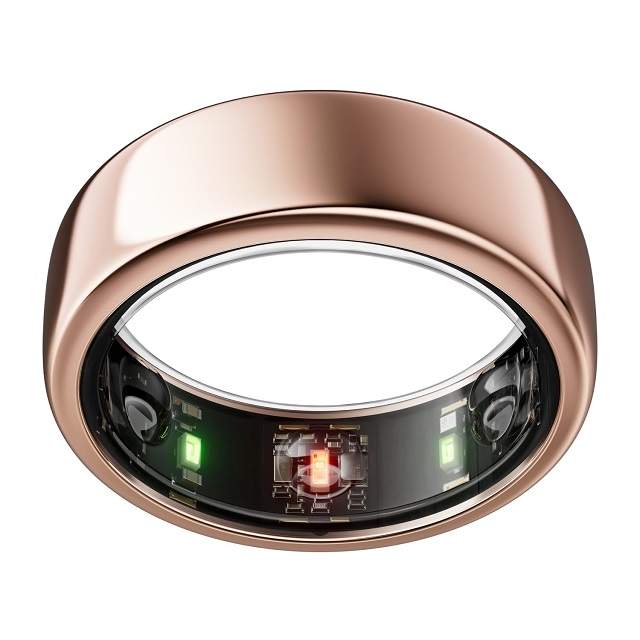 Oura Ring Gen3 is the most refined smart ring for health tracking.
It focuses on sleep quality, recovery, and long-term health trends.
It tracks heart rate, HRV, temperature, activity, and blood oxygen levels.
It stands out because of its Readiness Score and Sleep Score.
These scores simplify complex data into daily guidance.
The ring also uses a titanium build, so it feels light and durable.
Key Features
- Advanced sleep tracking with detailed stages
- HRV and temperature trends for recovery analysis
- Water-resistant and comfortable for 24/7 wear
Pros
- Very high accuracy in sleep and recovery tracking
- Strong AI-driven insights and daily scores
- Premium build and comfort
Cons
- Requires subscription for full insights
- Limited workout tracking features
Best for
Users who want deep health insights and accurate sleep tracking.
Ultrahuman Ring AIR — Best for Fitness Enthusiasts
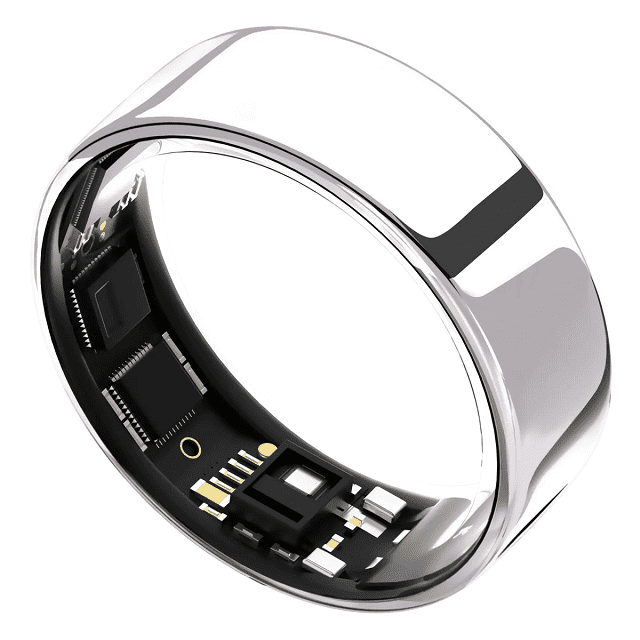 Ultrahuman Ring AIR focuses more on fitness, recovery, and metabolic health.
It tracks activity, sleep, heart rate, and recovery patterns.
Its key strength is how it connects activity with recovery insights.
It helps users adjust workouts based on body readiness.
Key Features
- Recovery-focused insights for workouts
- Continuous heart rate and activity tracking
- No subscription model
Pros
- No recurring subscription cost
- Strong focus on fitness and performance
- Lightweight and comfortable
Cons
- App insights are less advanced than Oura
- Sleep tracking is good, but not the most accurate
Best for
Users who focus on fitness tracking and recovery optimization.
RingConn Smart Ring — Best No Subscription Option
RingConn offers a balanced feature set without any extra costs.
It tracks sleep, heart rate, stress, and activity trends.
It focuses on providing core health tracking without complexity.
This makes it a practical choice for everyday users.
Key Features
- Sleep tracking with stage breakdown
- Heart rate and stress monitoring
- Long battery life compared to competitors
Pros
- No subscription required
- Good battery performance
- Affordable entry into smart rings
Cons
- App insights are simpler
- Fewer advanced AI features
Best for
Users who want basic health tracking with no ongoing cost.
Samsung Galaxy Ring — Best Ecosystem Integration
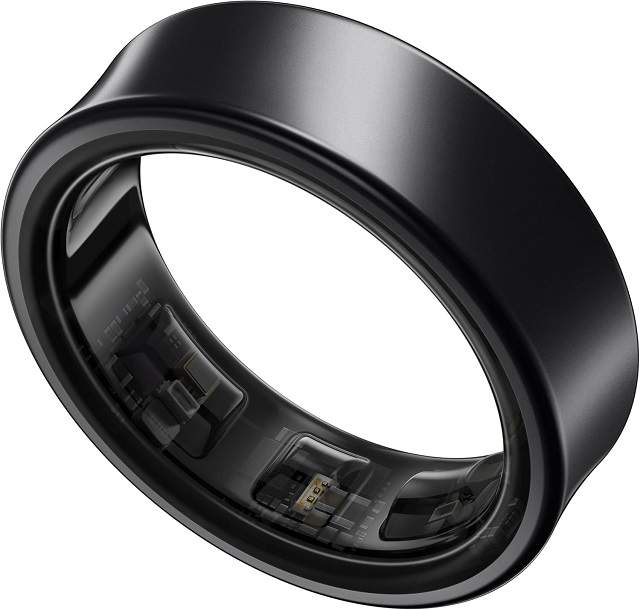 Samsung Galaxy Ring focuses on integration with the Samsung Health ecosystem.
It works well with Galaxy phones, watches, and health apps.
It tracks sleep, activity, heart rate, and recovery metrics.
The main advantage is how smoothly it connects with other Samsung devices.
Key Features
- Seamless sync with Samsung Health
- Balanced health and activity tracking
- AI-based insights within the Samsung ecosystem
Pros
- Strong ecosystem integration
- No subscription for core features
- Good balance of health and fitness tracking
Cons
- Best experience limited to Samsung users
- Still evolving compared to established rings
Best for
Users who already use Samsung devices and want seamless integration.
Product Comparison Table
| Feature | Oura Ring Gen3 | Ultrahuman Ring AIR | RingConn Smart Ring | Samsung Galaxy Ring |
| Health Tracking Accuracy | Very high | High | Moderate–High | High |
| Sleep Tracking | Best-in-class | Good | Good | Good |
| Battery Life | 4–7 days | ~6 days | Up to 7–10 days | ~7 days |
| Subscription | Yes | No | No | No |
| App & Insights | Advanced AI insights | Fitness-focused insights | Basic insights | Strong ecosystem-based insights |
| Best Use Case | Sleep & recovery | Fitness & activity | Budget users | Samsung users |
Final Take (Decision Guide)
- Choose Oura Ring Gen3 if you want the most accurate health insights. However,Oura Ring 4 Smart Ring is more advanced one.
- Choose Ultrahuman Ring AIR if you focus on fitness and recovery.
- Choose RingConn if you want a budget option with no subscription.
- Choose the Samsung Galaxy Ring if you already use Samsung devices.
Each ring serves a different user type, so your choice depends on your priority.
Smart Ring Comparison Table (Quick Overview)
This table gives a quick view of the most important differences.
It helps you decide based on battery, subscription, and use case.
| Feature | Oura Ring 4 Smart Ring | Ultrahuman Ring AIR | Samsung Galaxy Ring |
| Price Range | Premium | Mid-range | Premium |
| Battery Life | 4–7 days | Up to 6 days | Up to 7 days |
| Subscription | Yes (for full insights) | No | No |
| Key Features | Advanced sleep tracking, readiness score, HRV insights | Fitness tracking, recovery insights, metabolic focus | Samsung Health integration, balanced tracking, and AI insights |
| Best Use Case | Sleep and recovery tracking | Fitness and activity tracking | Samsung ecosystem users |
How to Use This Table
- Choose Oura if you want the most accurate sleep and recovery data.
- Choose Ultrahuman if you focus on fitness and daily activity.
- Choose the Samsung Galaxy Ring if you use Samsung devices daily.
Smart rings differ more in software experience and ecosystem than in hardware. So your final decision should depend on how you plan to use the data, not only the features.
Smart Ring vs Smartwatch — Which Is Better?
This comparison depends on what you want: passive health tracking or active features.
Smart rings and smartwatches both track health, but they serve different needs.
Quick Comparison Table
| Feature | Oura Ring 4 Smart Ring
₹28,900•Amazon.in |
Samsung Galaxy Ring
₹22,499•amazon.in |
Smartwatch (General) |
| Accuracy (Sleep & Recovery) | Very high | High | Moderate |
| Comfort (24/7 Wear) | Excellent | Excellent | Moderate |
| Battery Life | 4–7 days | Up to 7 days | 1–2 days |
| Display & Interaction | None | None | Full display |
| Notifications & Apps | No | Limited | Yes |
| Best Use Case | Sleep & recovery | Balanced health tracking | Fitness + smart features |
Accuracy Comparison
Smart rings perform very well in sleep and recovery tracking.
They sit on your finger, which has strong blood flow signals.
This improves heart rate and HRV accuracy compared to wrist devices.
Many tests show Oura and Samsung rings lead in sleep tracking.
Smartwatches are better for real-time workout tracking.
They track GPS, steps, and active sessions more effectively.
Conclusion:
- Smart rings → better for sleep and recovery
- Smartwatches → better for workouts and real-time data
Comfort & Usability
Smart rings are small, light, and easy to wear all day.
They do not have screens, so they feel less distracting.
This makes them ideal for sleep tracking and continuous use.
You can wear them without thinking about them.
Smartwatches feel bulkier, especially during sleep.
But they offer quick access to data and notifications.
Conclusion:
- Smart rings → best for comfort and passive use
- Smartwatches → better for interaction and control
Battery Life
Smart rings last longer because they have no display.
Most models run between 4 to 7 days on one charge.
Some models even go beyond that with optimized usage.
Smartwatches usually last 1 to 2 days.
Frequent charging becomes necessary with heavy use.
Conclusion:
- Smart rings → longer battery life
- Smartwatches → shorter but feature-rich
Use-Case Scenarios
Choose a smart ring if you want:
- Passive health tracking without distractions
- Better sleep and recovery insights
- A lightweight wearable for 24/7 use
Choose a smartwatch if you want:
- Notifications, apps, and calls
- Workout tracking with GPS
- Real-time interaction and control
Final Verdict — Which Is Better?
There is no single winner. It depends on your goal.
- Choose a smart ring for health tracking, sleep, and comfort.
- Choose a smartwatch for features, workouts, and interaction.
Many users now combine both for complete tracking.
Are Smart Rings Accurate for Health Tracking?
Smart rings are accurate for tracking trends like sleep, heart rate, and recovery. However, they are not medical-grade devices.
They work best for tracking patterns over time, not for clinical diagnosis.
If you use them correctly, they can guide daily decisions about sleep and recovery.
Scientific Perspective
Smart rings use sensors like PPG, temperature, and motion tracking.
These sensors estimate heart rate, HRV, sleep stages, and oxygen levels.
Studies show that rings like the Oura Ring Gen3 perform well for sleep and resting heart rate.
They show strong agreement with lab-based sleep measurements in many cases.
However, they rely on algorithms to interpret raw data.
So results can vary based on movement, skin contact, and environment.
Key takeaway:
Smart rings are scientifically reliable for trends, but not perfect for exact values.
Limitations of Wearable Sensors
Smart rings have physical and technical limitations.
They measure signals from the skin, not directly from internal systems.
- Motion and loose fit can affect accuracy
- Sweat and temperature changes can impact readings
- Workout tracking is less accurate than dedicated fitness devices
They also estimate sleep stages using indirect signals.
This means results may differ from clinical sleep studies.
Key takeaway:
Smart rings provide estimates, not medical-grade measurements.
When to Trust the Data
You should focus on patterns, not single readings.
One night of poor sleep data may not mean a real problem.
Use the data to track trends across days or weeks.
Look for consistent changes in sleep, HRV, or recovery scores.
Smart rings are most useful for:
- Improving sleep habits
- Managing stress and recovery
- Understanding long-term health patterns
If you notice unusual or extreme values, consult a medical professional.
Key takeaway:
Trust smart rings for guidance and awareness, not diagnosis.
Final Verdict
Smart rings are accurate enough for daily health tracking and insights.
They work best when you use them to understand long-term trends.
They are not a replacement for medical devices, but they are a strong personal health tool.
Who Should Buy a Smart Ring?
Smart rings suit people who want continuous health tracking without distractions.
They work quietly in the background and focus on long-term insights.
If you value comfort and simple data, a smart ring makes sense.
Fitness Enthusiasts
Smart rings help you understand recovery, not only activity.
They track heart rate, HRV, and sleep to guide training decisions.
For example, the Ultrahuman Ring AIR focuses on recovery and performance trends.
It helps you decide when to push harder and when to rest.
If you already use a smartwatch, a ring adds deeper recovery insights.
This combination improves training balance and reduces overtraining risk.
Biohackers
Biohackers track small changes in the body over time.
Smart rings provide continuous data with minimal effort.
Devices like the Oura Ring Gen3 track temperature, HRV, and sleep cycles.
This helps identify patterns in stress, recovery, and lifestyle habits.
You can test routines, track results, and adjust behavior using real data.
This makes smart rings useful tools for self-optimization.
Professionals (Minimalist Wearables)
Many professionals prefer devices that do not distract them.
Smart rings offer full tracking without screens or notifications.
They look like regular rings and fit formal environments easily.
You check insights later through the app, not during meetings.
This makes them ideal for people who want health tracking without interruptions.
They blend into daily life without drawing attention.
Sleep-Focused Users
Smart rings perform best in sleep tracking.
They measure sleep stages, heart rate, and temperature overnight.
The finger provides stable signals, so sleep data is more consistent.
Rings like the Oura Ring Gen3 provide detailed sleep scores and recovery insights.
If your goal is better sleep, a smart ring is one of the best tools available.
It helps you understand patterns and improve habits over time
Quick Summary
Smart rings are ideal for users who value comfort, simplicity, and long-term health insights.
- Best for: sleep tracking, recovery, and passive monitoring
- Not ideal for: notifications, apps, or real-time interaction
They work best when you focus on trends, not instant feedback.
Pros and Cons of Smart Rings
Smart rings focus on simplicity, comfort, and long-term health tracking.
They remove distractions and collect data in the background.
But this minimal design also creates some trade-offs.
Advantages
Smart rings are lightweight and easy to wear all day.
They feel natural on your finger and do not interfere with daily tasks.
This makes them ideal for continuous use, including sleep tracking.
They also offer long battery life compared to most wearables.
Since they do not use a display, they consume less power.
Most smart rings last several days on a single charge.
Another key benefit is passive tracking.
You do not need to interact with the device often.
The ring collects data automatically and shows insights in the app.
Limitations
Smart rings do not have a display.
You cannot check data directly on the device.
You must use a mobile app to view insights.
They also have limited workout tracking features.
They do not track exercises as accurately as smartwatches.
Features like GPS and real-time metrics are missing.
The small form factor creates technical limits.
There is less space for sensors and advanced hardware.
This can affect the depth of features compared to larger devices.
Quick Summary
Smart rings are best for comfortable, passive health tracking.
They work well for sleep, recovery, and long-term insights.
However, they are not ideal for users who want real-time data or advanced workout features.
Pros and Cons Table
| Pros | Cons |
| Lightweight and comfortable | No display |
| Long battery life | Limited workout tracking |
| Passive, distraction-free tracking | Hardware limitations due to size |
Future of Smart Rings (2026 and Beyond)
Smart rings are moving beyond basic tracking.
They are evolving into predictive health tools and connected health systems.
The next few years will focus more on intelligence than hardware.
AI Health Prediction
Smart rings are shifting from tracking data to predicting health outcomes.
They already collect heart rate, HRV, sleep, and temperature continuously.
AI now analyzes these signals to detect early changes in the body.
This helps identify stress, fatigue, or potential health risks earlier.
Wearables in 2026 can even predict health changes before symptoms appear.
Future rings will act more like personal health assistants.
They will guide sleep, recovery, and daily habits based on real-time data.
This moves wearables from reactive tools to proactive systems.
Non-Invasive Glucose Monitoring (Emerging)
One of the most important developments is glucose monitoring.
Current devices require invasive sensors or external patches.
Researchers and companies are working on non-invasive solutions.
Smart rings may soon estimate glucose levels using optical sensors.
Some prototypes also explore blood pressure and metabolic tracking.
If this becomes reliable, it could transform diabetes management.
It would allow continuous monitoring without discomfort.
Integration with Healthcare Systems
Smart rings are slowly moving toward medical integration.
They already track multiple biomarkers like HRV and temperature.
The next step is connecting this data with healthcare providers.
AI platforms are building ecosystems where wearables feed real-time health data.
This could enable:
- Early disease detection
- Remote patient monitoring
- Personalized treatment plans
Healthcare is expected to become a major growth area for smart rings.
Quick Summary
The future of smart rings is focused on prediction, prevention, and integration.
- AI will move from tracking to predicting health issues
- New sensors may enable non-invasive monitoring
- Healthcare systems will start using wearable data
Smart rings are evolving from gadgets into continuous health platforms.
Final Verdict — Are Smart Rings Worth It in 2026?
Smart rings are worth it if you want simple, continuous health tracking without distractions.
They deliver strong insights for sleep, recovery, and daily readiness.
For most users, they work best as a long-term health companion, not a feature-rich gadget.
Best Overall Recommendation
The Oura Ring Gen3 remains the best overall choice.
It offers the most reliable sleep tracking and clear recovery insights.
If accuracy and data quality matter most, this is the safest option.
Who Should Buy a Smart Ring
You should consider a smart ring if you:
- Want better sleep tracking and recovery insights
- Prefer a lightweight device for 24/7 wear
- Value passive tracking over constant interaction
It is especially useful for people focused on health trends and habit improvement.
Who Should Skip It
A smart ring may not suit you if you:
- Need notifications, apps, or on-device interaction
- Focus heavily on workouts and real-time tracking
- Prefer detailed fitness metrics like GPS and live stats
In these cases, a smartwatch will be more useful.
Final Take
Smart rings are not replacements for smartwatches.
They serve a different purpose focused on insight, not interaction.
- Buy a smart ring for health awareness and recovery tracking
- Skip it if you want features, apps, and active control
If your goal is better sleep and long-term health insights, a smart ring is a strong choice in 2026.
FAQs about Best Smart Rings for Health Tracking
Are smart rings better than smartwatches?
Smart rings are better for sleep tracking, recovery, and passive health monitoring.
They are more comfortable and less distracting for 24/7 use.
Smartwatches are better for workouts, notifications, and real-time interaction.
The better choice depends on whether you want insights or features.
Do smart rings require a subscription?
Not all smart rings require a subscription.
Some models, like the Oura Ring Gen3, require a monthly plan for full insights.
Others, like Ultrahuman Ring AIR and RingConn Smart Ring, offer full features without extra cost.
You should check this before buying, as it affects long-term value.
Can smart rings measure blood pressure?
Most smart rings cannot measure blood pressure accurately.
They estimate health metrics using light-based sensors and motion data.
Some brands are working on this feature, but it is still experimental.
For accurate readings, medical devices are still required.
How long do smart rings last?
Smart rings usually last 4 to 7 days on a single charge.
Battery life depends on usage and features enabled.
In terms of durability, most rings last several years.
Premium models use materials like titanium for long-term use.
Are smart rings safe to wear all the time?
Yes, smart rings are generally safe for continuous use.
They use low-power sensors and do not emit harmful levels of radiation.
Most are water-resistant and designed for 24/7 wear.
However, you should remove them if you feel discomfort or skin irritation.
Quick Take
Smart rings are safe, practical, and useful for daily health tracking.
But they are not medical devices and should be used for guidance, not diagnosis.
People Also Ask about the Best Smart Rings for Health Tracking
What can a smart ring track?
A smart ring tracks heart rate, HRV, sleep stages, SpO2, and activity levels.
It also measures temperature changes and recovery patterns over time.
Some advanced models, like the Oura Ring Gen3, provide readiness and sleep scores.
These insights help you understand daily health and long-term trends.
Is a smart ring worth buying in 2026?
A smart ring is worth buying if you want passive health tracking and better sleep insights.
It works best for users who prefer comfort and long-term data tracking.
It may not suit users who want apps, notifications, or workout features.
Your decision depends on your usage needs.
Can a smart ring replace a smartwatch?
A smart ring cannot fully replace a smartwatch.
It does not support notifications, apps, or real-time interaction.
However, it can replace a smartwatch for sleep and recovery tracking.
Many users combine both devices for better results.
Which finger is best for a smart ring?
Most brands recommend wearing the ring on your index or middle finger.
These fingers provide stronger blood flow signals.
Better signal quality improves heart rate and sleep tracking accuracy.
You should also ensure a snug but comfortable fit.
Do smart rings work without a phone?
Smart rings can collect data without a phone during the day.
They store data internally and sync later with the app.
However, you need a phone to view insights and detailed reports.
Without the app, the ring has limited usefulness.
Quick Take
Smart rings answer a simple need: track health without effort.
They work best when you focus on trends, not instant data.
Last Updated: April 2026
About author

